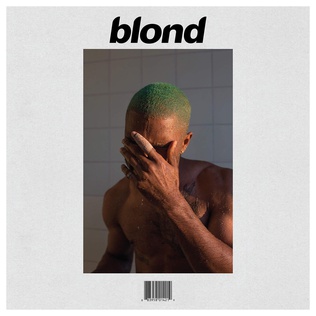
Why good music is about more than being…”good.”
Frank Ocean is a great artist. Possibly one of the best of our generation.
Maybe I have just had the pleasure of being surrounded by folks with sense, but I have never met anyone under the age of 35 who didn’t agree that Frank Ocean makes good music, even if they wouldn’t consider themselves a “real fan” of his work.
Channel Orange has a sound so timeless that its 2012 release means nearly nothing with regard to its ability to sound so fresh. Songs like “Monks” and “Golden Girl” and “Thinkin Bout You” could easily blend in amongst the newer Alternative R&B joints. And don’t get me started on Blonde– an album that, upon its 2016 release, became my life’s soundtrack. I was so far gone that I couldn’t even fall asleep unless my night began with “Nike” playing softly in the background. I always knew that it was going to be a good night’s rest if I started to drift out of consciousness somewhere between “Skyline To” and “Good Guy.”
His music made both my sleeping and waking life much cushier, as his words coated my dreams with tales of pink and white skies and trips to Syd’s in the X6.
Whether you fixate on the vocals or the production or the themes he chooses to cover, I really couldn’t say that I’ve heard a “bad” song by Frank Ocean, even if it wasn’t my particular cup of tea.
But my reverence for his music, along with his presence amongst a few of my playlists, has not resulted in him being an artist whose music gets played often.
In fact, as good as I find his music to be, I purposely avoid it sometimes.
The fact of the matter is, “good music” is about more than being…good.
If you were to get technical, songs are comprised of multiple elements, such as structure, pitch, instrumentation, and lyrics. Colton Dewberry asserts that it is a song’s timbre, or quality of auditory sensations that a tone or sound wave produces, that truly determines whether or not a song resonates. Timbre comprises the quality of the tone and its voice, which helps us distinguish between instruments. It also encompasses the way that a sound changes over time, according to Hoffman Academy. The types of change, quality of change, and variance of change play huge roles in whether or not a song is deemed good or bad.
Take a song like Frank Ocean’s “Crack Rock,” which details a man’s addiction. If you were listen to the song’s instrumentation on its own, it feels like solitude and volatility personified– it is not meant to evoke a sense of comfort. At the same time, though, the beat maintains a structure that remains fairly consistent throughout the duration of the song.
The changes occur most with Frank Ocean himself and the way that he chooses to sing the song. He plays around with his pitch, his vocal scales, and even the projection of his voice. At times, his voice feels slanted in conjunction with the beat, a feeling that would perfectly align with the physical positioning of someone experiencing a high.
Songs like “Crack Rock” and “Ivy” and “Provider” are good because they are comprised of elements that sound and feel unpredictable. Good songs will surprise you with chords that stray from their structure with each new verse, with scales that change with each new iteration of the chorus, and with bridges and refrains that thrill you. Good songs have you on the edge of your seat for the entire duration.
I would argue that this is why the culture of releasing song snippets prior to the official release sometimes kill a song’s success. If you reveal too much, the listener is left with very little to be surprised by, which leads to them avoiding the full-length song altogether or heightens their expectations for what it will sound like– expectations that might not be met. But this is besides the point.
Explaining what makes a song sound “objectively good” could be as easy as analyzing music theory. But I believe that so-called good music is about more than its abidance to these standards.
This is why that one artist whose success fathoms you to no avail continues to reach high levels of success. Mind you, I could be referring to anyone.
Good music, at its core, is about feeling. How it makes you feel and whether or not those feelings coincide with how you want to feel in that very moment.
“Seigfried” by Frank Ocean, for example, is one of the most beautiful songs that I have ever heard. But my heart sinks into my stomach every time he belts out, “I’d rather live outside. I’d rather chip my pride than lose my mind out here.”
The song itself is such a profound portrait on the struggles of love and hopelessness and assimilating to society’s understanding of what a good, meaningful life looks like.
What a perfect reflection for the more existential moments, where one feels doomed to question their purpose and the meaning of life. What a terrible “pump me up” anthem for a night of hanging with the girls. (No judgment if that is your vibe, though.)
Good songs are about more than their alignment with universally recognized technical elements. Even more so, they are much bigger than our own, individual definitions of what good music sounds like.
As good and as Channel Orange, Blonde, and other Frank Ocean records are to myself and a number of people, they don’t always bring about feelings that I am willing to reckon with in a given moment. Even with Channel Orange, which feels much lighter in theme, the nostalgia that it summons in my spirit is often accompanied by melancholy. If “Sweet Life” or “Sierra Leone” pops up on a shuffled playlist, I am likely to let it play. However, I have to emotionally prepare myself for a full and conscious listen of the entire album. With Blonde, the experience is quite similar.
At mention of Frank Ocean’s name, I am quick to say how much I absolutely love his music. It is better than good.
But good music is a culmination of its technical quality and the quality of its resonance. Whether or not it consistently evokes memories and images and emotions that correspond with how you feel or how you want to feel.
Sometimes, Frank Ocean’s good music is a great fit. At other times, I can only take it in doses.
There is beauty in his ability to elicit such complex emotional responses through his music while maintaining an air of mystery. In an age where we are at times too tapped in with the personal lives of artists, Frank Ocean remains a purveyor of self-gatekeeping. He quite literally leaves it all in his music, music that has kept its novelty for years.
But some good things can only be consumed in moderation, like wine and sweet treats and, for people like me, a large portion of Frank Ocean’s discography. It’s beautiful and tragic for the better and for the worse of my emotional stages.
For dreams about thoughts that could think of dreaming a dream.
‘Where I cannot. Where I cannot.‘



 The Rhyme Suite
Leave a comment