Why must the commercial performance of Black women in music take precedence over all else?
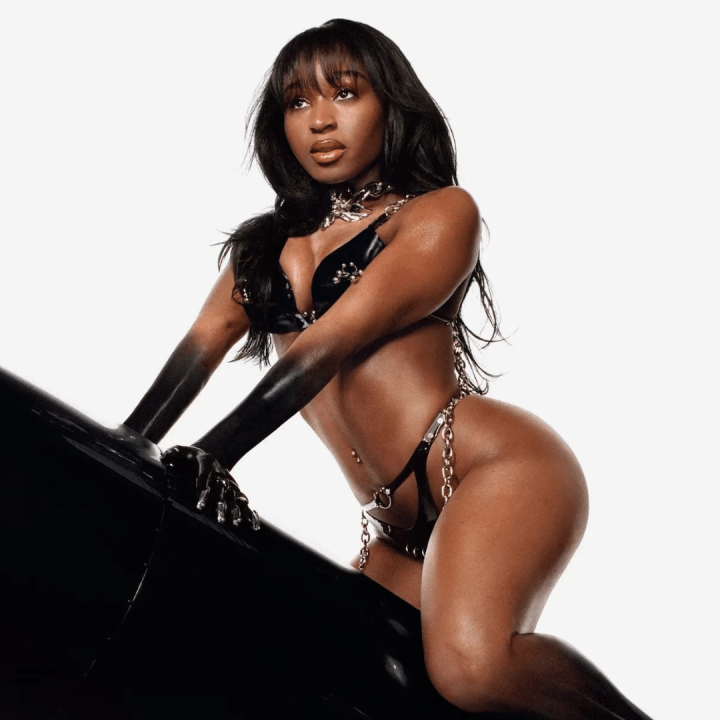
Upon first listen of Normani’s DOPAMINE, I was more elated than anything.
“Big Boy (ft. Starrah)” might be one of the best album openers I’ve heard this year, and it sets the stage perfectly for a project that showcases the Fifth Harmony alum’s Southern pride, beautiful vocals, and playful sexiness.
Over the years, Normani has been met with much criticism for the length of time that it has taken for her debut album to hit the streets– understandably so. While she’s released a few singles since her 2018 tweet revealing that she had the album title picked out, it has often felt as though the hype would die down as quickly as it built up. People were disillusioned, so much so that her album announcement from late February was met dually with excitement and skepticism as time passed.
In the time leading up to June 14, Normani spoke with publications such as The Cut, ELLE, and DAZED on the difficulties she’s faced over the years, such as racism and family health struggles. But what really kept her album in the vault for so long was her strive toward authenticity. Where her 2019 hit “Motivation” filled a commercial need – the label’s wants and expectations – she wanted her debut album to fulfill an artistic one, showcasing growth and freedom and unapologetic blackness. I’d like to think that the singer succeeded.
DOPAMINE is a great foundation for Normani to continue building her discography and musical imprint. It’s clear that she put her soul into the music and worked hard to ensure that it’d be something she could be proud of. The timeline has been less than ideal, but the music has been more than worth the wait.
One would have hoped the world would welcome her artistic grit with open arms, but it’s seemed as though there are far too many who are obsessed not with the music, but rather with the prospect of deeming her a flop.
While the music could and should be the focus, it is streaming numbers, chart placements, and the presumed failure of her team to execute an expansive rollout that are seemingly taking precedence.
Truthfully, this seems to be the case for a lot of Black women in the music industry. At the intersection of art and its commercial performance, Black women are often berated, humiliated, and shamed for things that are more than likely out of their control.
There are still those who have a genuine interest in the music itself and how well it was crafted; however, there are far too many who focus on the commercial aspect. Streaming and chart placements are important, but only to the extent that it heightens one’s ability to receive recognition at award shows. Numbers do not dictate how good the music actually is.
So why is everyone so obsessed with how well the music is performing, rather than encouraging people to listen to the music, which would help the music perform better? And when did you all become experts on artist management?
Normani herself has already acknowledged how the rollout could have been much better. In an episode of “The Terrell Show,” she admitted that she and her team have done the best that they could in the face of what cards they were dealt, and that on the business side, things could have been handled much more responsibly.
“There have been plenty of times where I really didn’t see the light at the end of the tunnel, and I wasn’t necessarily sure how this was going to come out,” she said.
She also added that her expectations are more than aligned with that of the fans. “I think the misconception is, whatever it is that [fans] are wanting … I would’ve wanted to give that to them, too. It’s not that I don’t care. That bothers me when there is a misconception that I don’t do enough because I’ve dedicated my entire being to this.”
Clearly, the singer expected things to pan out differently– which is all the more reason to extend grace. But grace is far from a hot commodity when it comes to Black women in music.
Similar “flop” conversations arose when Chlöe dropped her debut album, In Pieces, in 2023 and when Megan Thee Stallion dropped her sophomore album, Traumazine, in 2022. The two musicians were criticized for the commercial performance of the albums. In Megan’s case, the seemingly rushed rollout seemed to be the main focus, while in Chlöe’s case, Beyonce’s presumed failure to promote the album on her channels became a huge point of contention.
Black women don’t have the luxury of being granted grace or understanding in the face of what the public deems as a failure or a misstep.
Instead, they are humiliated.
The fact of the matter is, true failure tends to be a rarity amongst these women. One has not failed just because their album did not debut at #1 on Billboard charts. One has not failed just because their lead single has not achieved virality amongst the varying social media channels, or because they have not dropped visuals in what has been conceived as a timely manner.
Misogynoir, colorism, and good ol’ fashioned racism tend to be at the forefront of these misaligned expectations. Black women can do any and everything that they are “supposed” to do, and there will still be those who find any reason to criticize them. The world has made it more than clear that they love the aesthetic and the output of Black women– not Black women themselves.
But we also live in a world that is obsessed with quantity, not quality.
We measure success by the appearance of popularity, rather than the reality of how good something is. We move under the assumption that art is something to be delivered on a silver platter, not something to be intentionally sought after. We have de-romanticized the thrill of discovery, resolving that art is only worth engaging with if it pops up on your Explore page.
There are certainly critiques that can be given to record labels and artist managers in terms of music promotion, but there is a thin line between healthy criticism and humiliation rituals. And frankly, the latter seems to be reserved solely for the artists themselves, which is unfair.
As consumers, our only real job is to engage with the art, not the commerce. One will always have a great impact on the other, but great art always speaks to the people. Oftentimes, it speaks for itself. As long as people have access to it, and as long as there are people with whom it genuinely resonates, those other measure of success become nothing more than a formality.
Anyone who holds reverence for a public figure will typically hope that they receive the recognition they deserve for a job well done, but a song does not have to perform well commercially well in order for you, as an individual, to enjoy it. It’s not like there is one chance, and one chance only, to listen to an album once it has been released.
At the intersection of art and commerce, there exists intentionality on both the creator and the consumer’s end. We are linked by our intentions, our engagement with one another, and most prominently by the transcendence of great art.
So enjoy it, regardless of how much the world sees its quality. There’s time for others to catch up. And as you do so, please leave Black women the hell alone.
 The Rhyme Suite
Leave a comment